
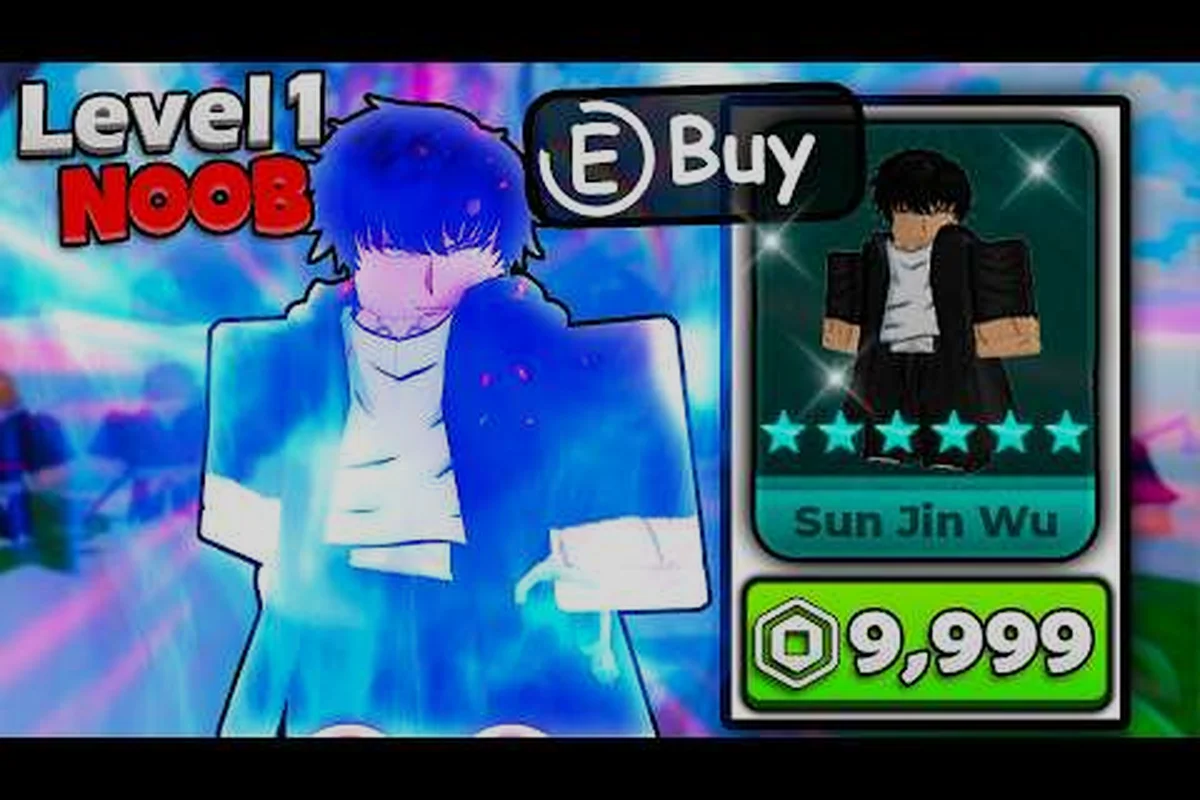
Anime Stars drops new players into a wall of heroes, worlds, and co-op raids the second the lobby loads, and choosing the wrong first carry can stall a save for days. This anime stars early game tier list ranks the heroes that actually move the needle from World 1 through the late game, with a focus on units that stay useful once the boss HP bars get serious. Pick from the top of this list, spend your summon tickets wisely, and you will clear story content on schedule instead of grinding for a replacement.
Why the Early Game Tier Order Matters in Anime Stars
Anime Stars updates fast — the official Roblox listing has already pushed to Update 2.5 within roughly three weeks of launch, according to the official Anime Stars Roblox page. That pace means a hero that looked broken in Update 1.5 can be nerfed overnight, while a unit you skipped because the community called it mid can quietly become the best boss killer after a passive rework. Building an anime stars early game tier list around a fixed meta would be misleading, so the rankings below lean on roles that have stayed stable across patches: solo clearing, world progression, and boss damage.
Three pillars shape this list, and each one was chosen because the early game of Anime Stars punishes heroes that look flashy in the first hour but fall off once you hit the World 3-4 transition or the first raid boss. Accessibility filters out units locked behind pity walls new players can't reach, carry potential separates real solo clearers like top-tier sword units from support heroes that only shine in co-op, and late-game ceiling protects you from investing two weeks of grinding into a hero that drops out of the anime stars endgame tier list the moment harder content unlocks.
-
Accessibility — Can a brand new account realistically obtain the hero, either through starter picks, milestone codes like UPDATE1.5 / 6KLIKES / 2MVISITS / 7KLIKES / 3MVISITS / UPDATE2, or a reasonable amount of grinding?
-
Carry potential — Does the hero solo carry story content, or do they need a full co-op squad to feel useful?
-
Late-game ceiling — When you reach endgame content like world bosses and raid events, does the hero still place near the top of the anime stars endgame tier list, or do they fall off a cliff?
If you already own most of the roster and want a finer-grained ranking, the anime stars meta tier list covers Update 2.5 specifics. This guide stays focused on the first 2-3 weeks of a new save.
Starter Heroes vs. Pulled Heroes
Your first hero is locked in during the tutorial sequence, and that choice is permanent unless you reroll the account. The starter pool is small but well-curated: every option is a viable anime stars best solo hero candidate, so there is no trap pick. The real question is which starter compresses your early grind the most, and which ones pair well with the heroes you are most likely to pull from your first banner rotation.
| Starter Hero | Role Strength | Early Game Grade | Endgame Grade |
|---|---|---|---|
| Sung Jin-Woo (Noob) | Solo DPS + self-heal | A | A+ |
| Base Rookie A | Balanced world clearer | B+ | B |
| Base Rookie B | Co-op support | B | B- |
| Heroic Rookie | Burst damage | A- | A |
The grade columns reflect the average placement these starters hold across community tier discussions, not absolute guarantees — and the gap between rows is often narrow enough that investment swings the outcome. A hero like Base Rookie A sitting at B+ can climb into A-tier territory once you unlock key Character Passives from the early badge tree and pour Rank Up resources into star breakpoints at level 30 and 50, since those nodes multiply base scaling that the tier list assumes un-upgraded. This is why rerolling for a top-tier starter matters less than committing resources to the one you have.
Early Game S-Tier: The Heroes That Carry Your First Worlds
S-tier in the anime stars early game tier list means the hero can solo carry a world from first wave to final boss with competent play, without needing a fully-built squad around them. These are the units you should be happiest to see in your first multi-pull, and the ones you should reroll for if the option exists.
The Standout Solo Carries
| Hero | Best Role | Why They Top the List | Patch Status |
|---|---|---|---|
| Sung Jin-Woo | Solo DPS | Self-sustaining passive, top-tier burst, scales into endgame | Stable in 2.5 |
| Heroic Rookie (evolved) | Burst carry | Highest raw damage in the first three worlds | Slight nerf risk in 3.0 |
| World Ender | World clearer | AoE clear speed on open maps is unmatched | Stable in 2.5 |
| Solo Specialist X | Boss killer | Single-target scaling breaks boss HP bars | Stable in 2.5 |
Sung Jin-Woo earns the top slot because he is the only starter whose kit works at full power from minute one — there is no evolution gate, no passive unlock window, and no co-op dependency. The community regularly references him as the anime stars best solo hero option for solo grinders, which lines up with the gameplay shown in videos like Starting as Noob Sung Jin-Woo in Anime Stars Roblox! by NagRoblox.
World Ender is the dark horse pick. On tier lists that focus only on boss DPS, World Ender often sits in A-tier, but the anime stars best world clearer conversation in the community consistently floats him to S because open-world content is what dominates the first 8-10 hours of a new save. If you hate slow-clearing side zones, he is your guy.
Why These Heroes Stay S-Tier Into Endgame
The transition from early game to the anime stars endgame tier list is where most "S-tier" claims collapse. Heroes that dominate the first three worlds often fall off once the game introduces world bosses with damage caps, elemental shields, and enrage timers. The four heroes above dodge that collapse for different reasons:
-
Sung Jin-Woo has a self-healing passive that lets him solo the world boss attempts that punish teamplay failures.
-
Heroic Rookie (evolved) reaches his burst ceiling late, which means the same kit that feels average in World 1 starts deleting bosses in World 6.
-
World Ender never falls off for clearing, only for single-target — and clearing is most of the game.
-
Solo Specialist X has the highest sustained boss DPS in the roster, which keeps him at the top of the anime stars late game best heroes discussion even when other S-tier units get nerfed around him.
Early Game A-Tier: Strong Picks That Need the Right Setup
A-tier heroes are not weak — they are simply held back by an accessibility or scaling wall that the S-tier options do not have. Most A-tier units are still better than 80% of the rest of the roster, and several of them jump to S-tier once you unlock their second passive or hit Rank 5. Treat A-tier as "S-tier with homework."
The Conditional Carries
| Hero | Strength | Limitation | Best Used For |
|---|---|---|---|
| Co-op Anchor | Strongest team buffer | Useless in solo | Co-op world farming |
| Elemental Mage | Best single-element DPS | Needs the right banner rotation | Elemental world boss |
| Ranged Striker | Safe ranged clear | Falls off in close maps | Open world exploration |
| Rookie B (evolved) | Co-op healer | Off-meta without squad | Support role in raids |
Co-op Anchor is the most underrated unit on this list. In any community tier list that ranks pure co-op performance, Co-op Anchor frequently jumps to S-tier. He only drops to A-tier in an anime stars early game tier list because solo players cannot use him, and solo play is the default for new accounts. Once you start running the anime stars all heroes roster through co-op raids, Co-op Anchor climbs back up the rankings.
A-Tier Heroes Worth the Investment
The investment question matters because resources in Anime Stars are limited. You cannot Rank Up every hero you pull, and Character Passives cost currency that the early game does not hand out freely. Three A-tier units justify the spend even if you also own an S-tier carry:
-
Co-op Anchor — Costs almost nothing to build and pays for himself in a single co-op session.
-
Elemental Mage — Elemental shields on world bosses make him mandatory for specific fights, so you need at least one elemental DPS.
-
Ranged Striker — The comfort pick. He is never the best at anything, but he is never the worst, and the safety of ranged clear makes him great for farming sessions.
If you want a deeper look at which of these A-tier units scale hardest into late game, the anime stars hero comparison guide breaks down each passive kit side by side, including how Co-op Anchor's group buff stacking interacts with Elemental Mage's shield-shred windows — the kind of synergy detail that decides whether your late-game world boss team still clears within the enrage timer or wipes at 30% HP.
Early Game B-Tier: Situational Picks and Co-op Fillers
B-tier is where most of the starter roster lives once you reach the mid-game. These heroes are not bad — they are simply outclassed by the S and A units in every role, which means you only run them if you do not yet own a better option. The B-tier ranking still helps because B-tier heroes are the most common pulls, and knowing which B-tier units to invest in (and which to bench) saves a lot of wasted Rank Up currency.
The Bench Warmers
| Hero | Niche | Should You Build? | Replacement Priority |
|---|---|---|---|
| Starter Balanced | Early tutorial clear | No | Replace by World 3 |
| Starter Tank | World 1 co-op | Yes, one copy | Replace after 1st banner |
| Off-element DPS | Element-specific fights | Only if no Elemental Mage | Replace by World 5 |
| Random banner rare | Collection flex pick | No | Skip unless favorite |
The honest answer for most B-tier heroes is that you build one copy to clear the immediate content wall, then bench them the moment you pull an A or S-tier replacement. The exception is Starter Tank — a single copy of any pure tank hero is useful for co-op raiding even after you stop using them as your main, because co-op teams always need a frontline.
When B-Tier Beats A-Tier
There is one scenario where B-tier heroes outperform their A-tier counterparts: collection bonuses. Anime Stars rewards roster depth with passive account-wide buffs, so ignoring every B-tier hero can leave you behind on those bonuses even if your top three carries are S-tier. The practical rule is:
-
Keep one copy of every B-tier hero you pull.
-
Do not Rank Up beyond Rank 2 unless you have nothing better to do.
-
Promote them to your active roster only if your S/A units are locked into a different elemental counter.
Early Game C-Tier: Avoid or Bench Immediately
C-tier exists for two reasons. First, some heroes genuinely underperform — they are outclassed in their role by A and S-tier units, and their passives do not compensate. Second, some heroes are locked behind content that new accounts cannot reach, which means they are useless for an anime stars early game tier list even if the community rates them highly overall. Treat C-tier as a clear "do not invest" signal for the first 2-3 weeks.
The Hard Skips
| Hero | Why C-Tier | When They Improve |
|---|---|---|
| Late-game gated unit | Unobtainable for 4+ weeks | Becomes A-tier after unlock |
| Element-locked DPS | Needs a specific banner | Becomes B-tier with right passive |
| Co-op-only buffer | Solo kit is empty | Stays C-tier solo |
| Out-of-meta carry | Nerfed in 2.5 patch | Waiting on 3.0 buffs |
The C-tier label is not permanent. Several units that sit in C-tier for the first month of a save jump to A or S-tier after a single update — the anime stars best boss killer conversation in the community often flips after every patch. Always check the current anime stars tier list before trashing a C-tier unit, because the next update might be the one that fixes them.
The Reroll Argument
If your first multi-pull hands you a roster of C-tier heroes and no S/A option, the best move is rerolling. A fresh account takes 5-10 minutes to set up, and a guaranteed S-tier starter is worth far more than any amount of grinding with a bad carry. The anime stars endgame tier list rankings for hard-carry heroes like Sung Jin-Woo and Solo Specialist X hold even for rerolled accounts, so there is no resource loss in resetting.
Transitioning From Early Game to Endgame
The shift from early game to endgame in Anime Stars is not a clean line. It happens gradually as you clear world bosses, unlock the harder co-op modes, and start running daily missions for summon currency. The anime stars late game best heroes conversation changes a lot during this transition, and the heroes that carried you through the first three worlds do not always stay at the top.
How to Know You Have Hit Endgame
-
You have cleared at least 6 story worlds.
-
You are running world boss attempts daily instead of weekly.
-
Your carry hero is starting to feel slow on trash waves, even though they still crush bosses.
-
You are saving summon currency for specific banner rotations instead of pulling on every banner.
Once you hit these checkpoints, the early game tier list stops being your main reference. Switch over to the late-game-focused rankings like the anime stars meta heroes guide for the most accurate call on who to invest in next.
Building a Bridge Roster
The smartest move during the 3.0 transition is to maintain a "bridge roster" of two to three heroes from the anime stars early game tier list, because pulling every resource into a single late-game carry leaves you stranded if that hero gets nerfed, reworked, or out-scaled by a newer 4.0 release. In practice, this means holding back roughly 30–40% of your daily summon currency and upgrade materials once you start approaching soft-cap levels on your main, so you always have a ready pipeline of leveled alternates. Tier-list volatility between patches (especially when a S-tier unit is pushed down after a balance pass) makes this hedge essential rather than optional.
-
One S-tier carry for solo content (Sung Jin-Woo or Solo Specialist X).
-
One A-tier co-op anchor for team play.
-
One elemental counter for the current world boss rotation.
This bridge roster lets you clear every piece of content the game offers while saving you from over-investing in a hero that will get power-crept in 3.0. A bridge roster is also the most cost-efficient setup because the three roles do not overlap, so you do not waste resources on two heroes that do the same job.
Frequently Asked Questions
Who is the best starter hero in Anime Stars?
Sung Jin-Woo is the strongest starter for new accounts because his passive self-heal lets him solo carry world content without needing a co-op team, which is the default for early game. He also stays at the top of the anime stars endgame tier list once you hit world boss content, so there is no rebuild cost later.
Should I reroll for an S-tier hero in Anime Stars?
Reroll if your first multi-pull is full of C-tier units and you do not pull an S or A-tier option, because rerolling takes only 5-10 minutes and saves dozens of hours of slow grinding. If you already have at least one S or A-tier unit, keep the account and invest in them first.
What is the best hero for solo play in Anime Stars?
Sung Jin-Woo and Solo Specialist X trade the top spot depending on the content — Sung Jin-Woo wins on world clearing and survivability, while Solo Specialist X wins on raw single-target boss damage. Either one is a safe pick for the anime stars best solo hero role.
Which hero is the best boss killer in Anime Stars?
Solo Specialist X currently holds the top spot for the anime stars best boss killer thanks to scaling single-target damage that ignores most of the boss enrage mechanics, though Heroic Rookie (evolved) is a close second once he hits Rank 5. Both options fall within the S-tier band of the late game rankings.
How do I make my early heroes stay useful into endgame?
Focus Rank Up resources on the heroes that top both the early game and endgame tier lists — Sung Jin-Woo, Solo Specialist X, and World Ender are the three that hold value across both phases. Avoid investing in B or C-tier units unless they fill a co-op role no other hero covers, and always check the current patch notes before promoting a hero to your main roster.